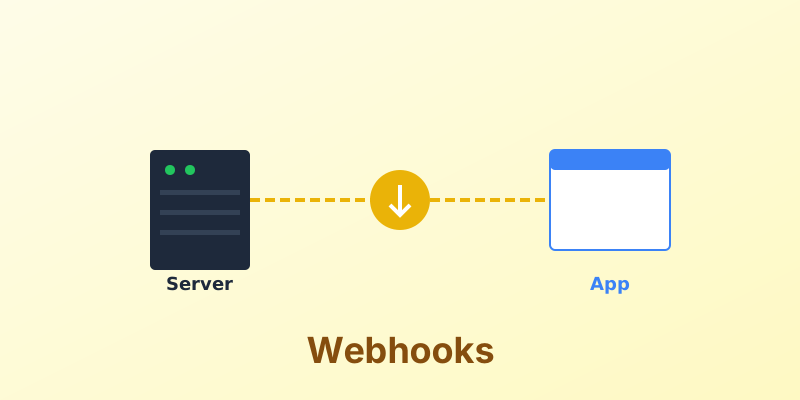
Using Webhooks for PDF Generation Workflows
In modern distributed systems, we don’t poll; we listen. Webhooks are the glue that lets your application react instantly when a document is ready.
1. The Polling Problem
Without webhooks, your app has to ask the server every second: “Is it done? Is it done? Is it done?” This wastes bandwidth and CPU cycles for both sides.
2. The Webhook Pattern
- Trigger: Your app sends a request: “Generate this report. When you are done, POST the result to
https://myapp.com/hooks/pdf-ready.” - Processing: The PDF service works on it (takes 5 seconds or 5 minutes).
- Callback: When finished, the service sends a POST request to your URL with the download link.
3. Security
How do you know the webhook is really from the PDF service and not a hacker?
- Shared Secret: The service signs the payload (HMAC-SHA256) using a secret key you both know.
- Verification: Your endpoint calculates the hash and compares it to the signature header. If they match, the request is legitimate.
4. Retries
What if your server is down when the webhook arrives? A good webhook provider will implement Exponential Backoff. It will try again in 1 minute, then 5 minutes, then 30 minutes, ensuring you never miss a document.
Conclusion
Webhooks enable real-time, event-driven architectures that are efficient and responsive.
Event-driven documents. MergeCanvas supports robust webhooks with signature verification and automatic retries.