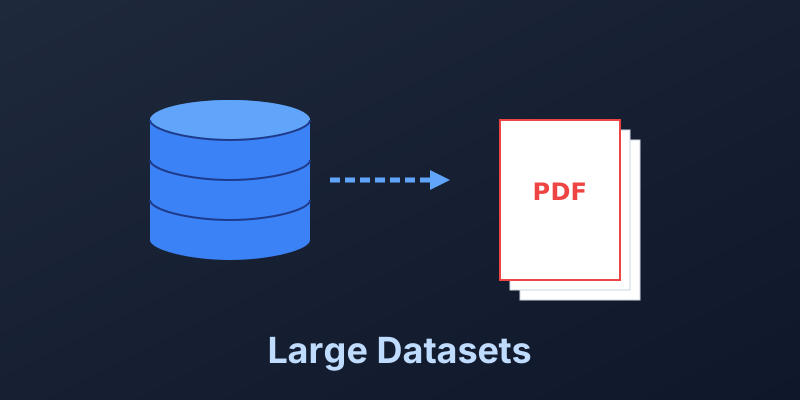
Handling Large Datasets in PDF Generation
Generating a one-page invoice is easy. Generating a 5,000-page “End of Year Transaction Log” is an engineering challenge.
1. The Memory Problem
If you try to load 50,000 rows of JSON data into memory at once, your server will crash (OOM - Out of Memory).
- Solution: Streaming. Read the data from the database row-by-row. Write it to the PDF stream row-by-row. Flush the buffer to the disk/network. Never hold the whole object in RAM.
2. Rendering Timeouts
A 5,000-page PDF might take 10 minutes to render.
- HTTP Timeouts: A standard HTTP request times out after 30-60 seconds. You cannot keep the user’s browser waiting.
- Async Pattern:
- User clicks “Download Report”.
- Server returns “202 Accepted” and a Job ID.
- Server processes in background.
- User polls for status or receives a webhook when done.
3. File Size
A 5,000-page PDF can be 500MB.
- Compression: Ensure your PDF library compresses text streams and subsets fonts.
- Splitting: Consider splitting the report into multiple volumes (Part 1, Part 2) if it exceeds email attachment limits (usually 25MB).
Conclusion
Big data requires big architecture. Streaming and async processing are non-negotiable for enterprise reporting.
Scale without limits. MergeCanvas is built to handle massive payloads and long-running jobs without breaking a sweat.